Benefits of yoga
By Patricia. Published May 2026, updated September 2026.
Yoga is, above all, a practice of awareness. It works the body and the breath, yes, but what it really trains is your attention and your ability to be present. That's what sets it apart from a gym, from stretching for its own sake or from pilates: you don't come here to train, you come to inhabit the body you have. The benefits, and there are many, grow from there.
What is yoga?
More than two thousand years ago, Patanjali defined yoga at the very start of his aphorisms, in a single line: yoga is the stilling of the fluctuations of the mind. Everything else, the postures, the breath, the movement, exists to serve that. That's why yoga isn't gymnastics. You may gain strength or flexibility, but that's a consequence, not the goal. The goal is to come back to yourself, step out of the noise and be present in the body and in the moment. It's a practice of focus and awareness, and that's the difference. There are many styles of yoga, and each reaches that place by its own path. Here I practise two that complete each other, Yin Yoga and Kundalini Yoga.
“Yoga is the stilling of the fluctuations of the mind.”
What yoga works in the body
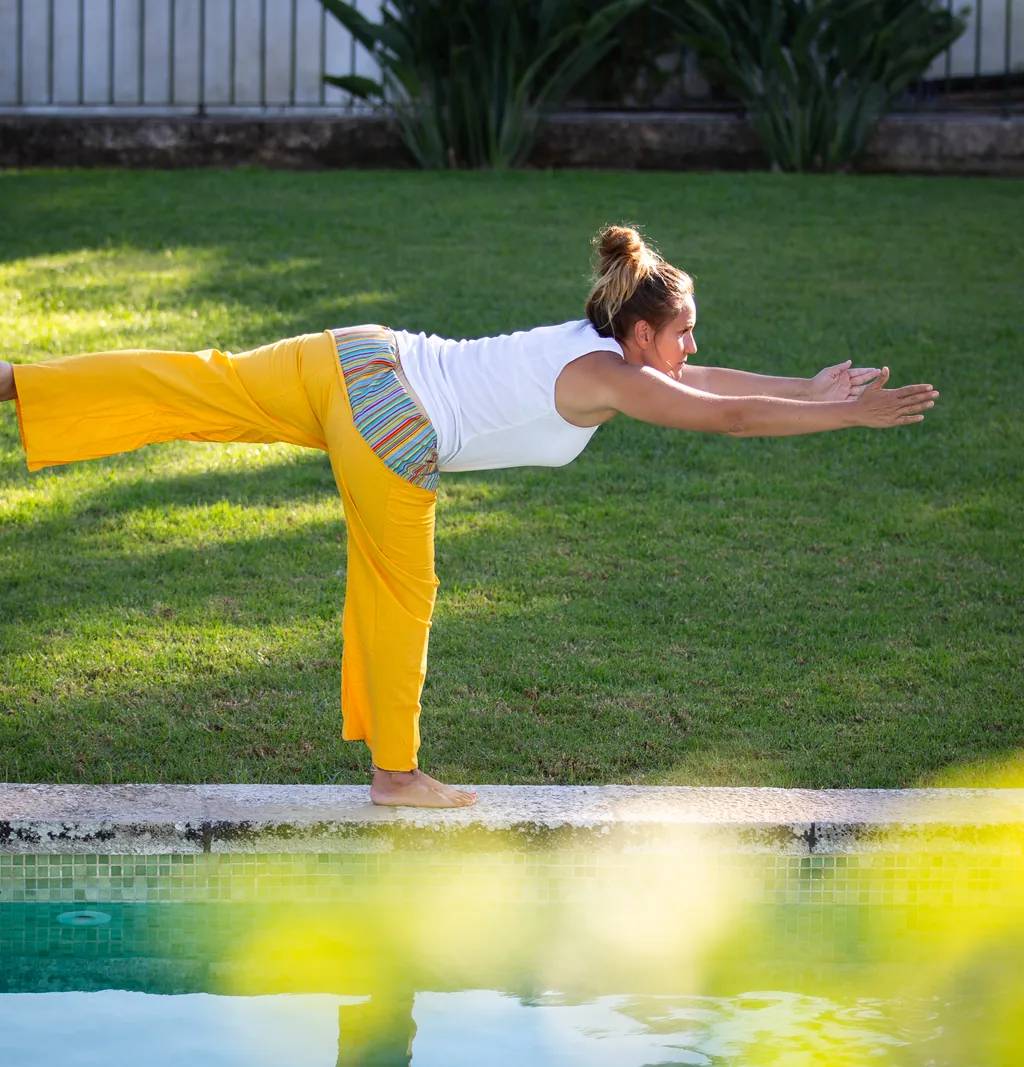
Even though it's a practice of awareness, yoga happens in the body, and the body is grateful for it. It works in layers. First the muscles: slow movement and breath warm the body, and holding a posture builds strength and improves balance, while you also gain flexibility. Then a layer that tends to be forgotten: the connective tissue, the fascia, the ligaments and the joints. This is where Yin Yoga works, with long holds that hydrate those tissues and give mobility back to the structure, not just to the muscle. And there's the work on the inside. Through the postures, the twists, the compression and the breath, the practice reaches the internal organs and, above all, the glandular and nervous systems. In the Kundalini Yoga tradition it's said to strengthen precisely those systems, and many practitioners notice more vitality and a fuller breath.
What yoga does to the mind
Perhaps this is where the biggest difference is felt. When you slow the breath and hold a posture, you send the nervous system a signal that it can rest. The body leaves the alert mode it spends the day in and settles into a calmer state. Over time, it shows: less accumulated tension, a steadier mood and a mind that scatters less. It isn't running from what worries you, it's gaining room to look at it more clearly.
Yoga is meditation
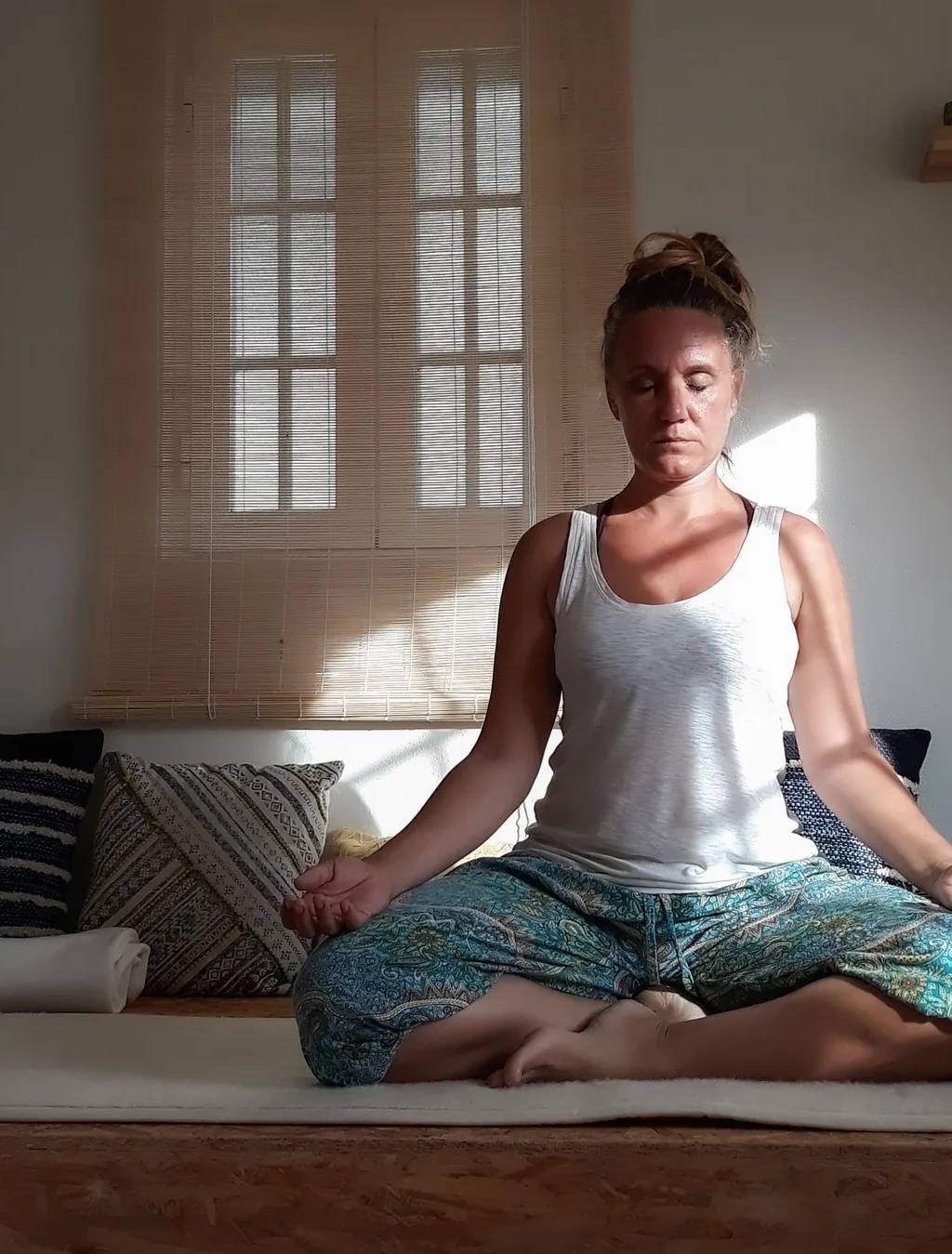
To meditate isn't to empty the mind, it's to train attention, and that can happen still or moving. In Kundalini Yoga, meditation is often done with a mantra and the breath, a sound or a rhythm the mind rests on so it scatters less, leading to states of deep calm. In Yin Yoga, the long stay in the postures is already a meditation: you don't need to empty the mind, the body takes care of that for you. Back to Patanjali: to still the mind. That's what you train, class after class, and that's what you take with you beyond the mat. What you notice is concrete: more focus, less noise and, often, better sleep.
Does yoga help you sleep?
It does, and it's one of the benefits I hear about most. A calm routine before bed prepares the body and the mind to switch off. Yin Yoga, being slow and turned inward, is particularly good for this: by calming the nervous system at the end of the day, it tends to show up in your sleep that same night.
Chakras and meridians: the maps of the subtle body
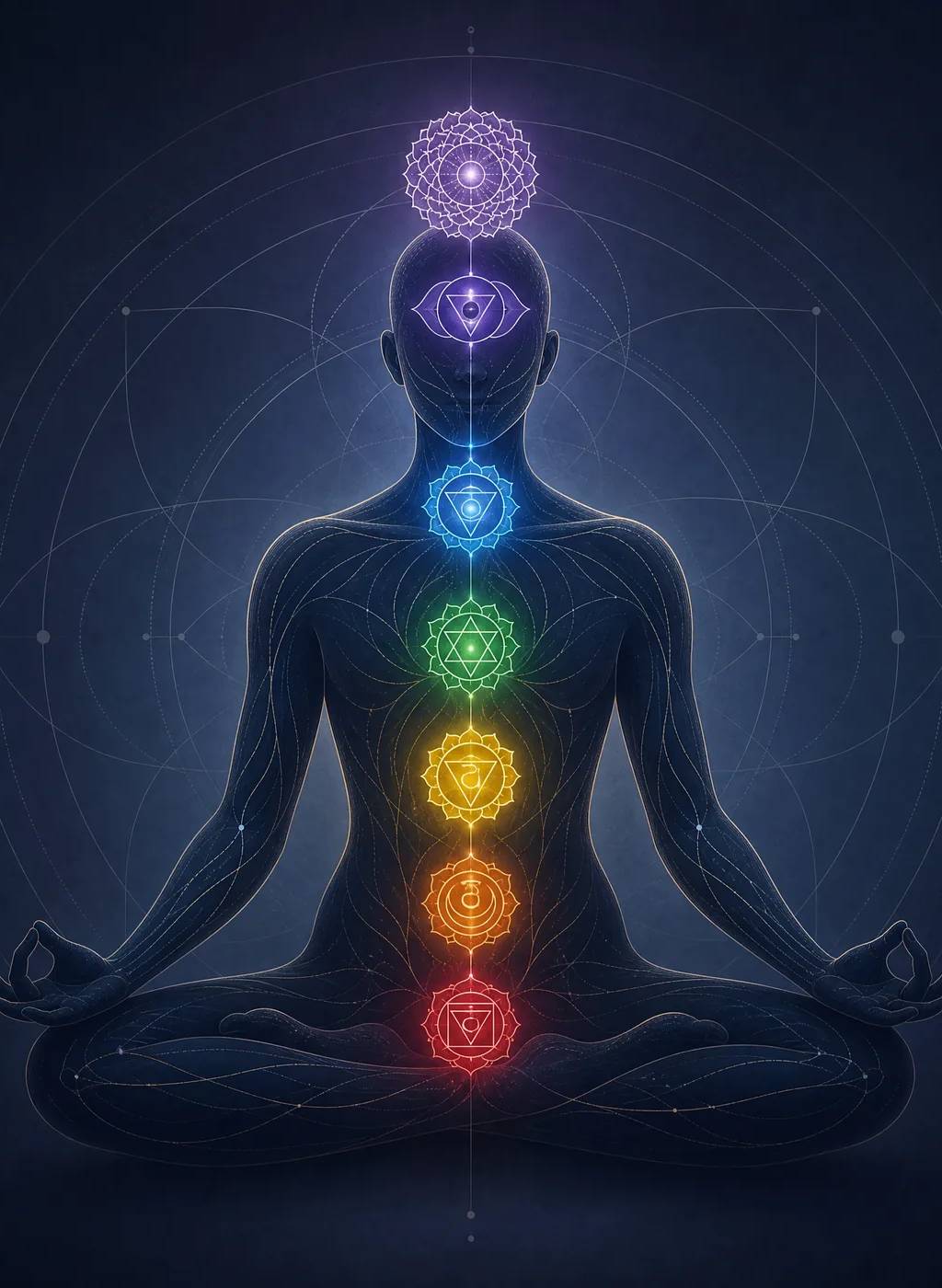
Yoga has its own way of looking at the body, beyond the muscles and the bones. It speaks of channels and centres through which energy flows. The meridians come from traditional Chinese medicine, the same channels acupuncture uses and through which the vital energy is said to run. The chakras are energy centres set along the spine, each linked to an area of the body and to a state. You don't need to believe any of this to practise or to feel the effects. But it's part of the tradition, and both Yin Yoga and Kundalini Yoga work with these two maps, each in its own way. If it interests you, that part is explored in more depth on each style's page.
Yin Yoga or Kundalini Yoga? Choosing by the benefits
The best way to choose isn't by theory, it's by what you're looking for. Yoga needs balance, like life: for every effort, a rest. These two practices are exactly that, one on each side. If you're looking to calm down, release tension, gain mobility and sleep better, your place is Yin Yoga, slow and still. If you're looking for energy, focus and clarity, and to work the breath, Kundalini Yoga goes with you. They don't compete, they complete each other, and you can practise both.
Do I need experience or to be flexible to start?
You don't need experience or to reach your toes with your hands, and that's the biggest myth. Flexibility is a result of the practice, not a requirement to walk in. As the saying goes, there's no perfect posture, there's yours: every body is different and the posture adapts to whoever does it. A note: if you have an injury, we can adapt the practice, but yoga doesn't replace treatment. Talk to your doctor or physiotherapist first, and tell me before class so I can adjust whatever's needed.

Frequently asked questions
The theory ends here. The rest happens on the mat. Come and try a class, in person or online.